



Upper Abdomen
ULTRASOUND
Upper Abdomen
Also Known As:
Hepatobiliary Ultrasound
USG for GB
Liver
spleen
pancreas (if organ speicific )
₹1,800
About This Test
An ultrasound of the upper abdomen is a non-invasive imaging technique used to assess the major organs located in the upper part of the abdominal cavity, including the liver, gallbladder, pancreas, spleen, and kidneys. It utilizes high-frequency sound waves to create real-time images, allowing evaluation of organ size, shape, and echotexture, as well as detection of abnormalities such as fatty liver, gallstones, cysts, masses, or bile duct dilatation. The examination is usually performed after fasting for 6–8 hours to minimize bowel gas and ensure better visualization of the hepatobiliary system. The study helps diagnose conditions like hepatitis, cholelithiasis, pancreatitis, and splenomegaly and assesses renal morphology and cortical differentiation. Ultrasound is safe, painless, and does not use ionizing radiation, making it suitable for repeated evaluations and follow-ups. Overall, an upper abdominal ultrasound is a valuable diagnostic tool for assessing hepatobiliary and upper gastrointestinal organ pathology
At a Glance
Home Collection
Not Available
Report TAT
1 Day
Category
ULTRASOUND
Preparation / Prerequisite
Overnight Fasting required. Bring old records.
USG done on first come first basis.
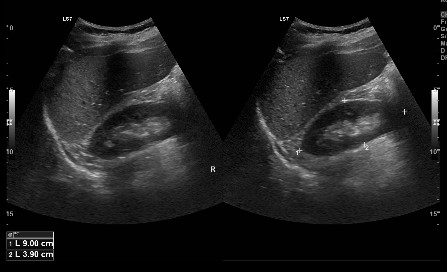
Reference Image
Frequently Asked Questions
1. What is a Upper abdomen ultrasound?
Ans. It is a non-invasive imaging test that uses sound waves to examine the organs in the abdomen.
Q
2. Which organs are checked?
Ans.Typically includes:
Liver
Gallbladder & bile ducts
Pancreas
Spleen
Kidneys
Q
3.Why is a Upper Abdomen Ultrasound done?
Ans. Upper abdominal pain
Liver disorders (fatty liver, hepatitis, cirrhosis)
Gallstones or gallbladder infection
Pancreatic conditions
Enlarged spleen
Abnormal liver function tests
Q
4. Is fasting required?
Ans. Yes. Usually 4-6 hours of fasting is required.
Water is allowed. No fasting is required if Gb has been operated / remove
Q
5. Do we need a full bladder?
Ans. No. A full bladder is not required
Q
6. Is it safe?
Ans. Yes. Ultrasound is very safe and does not use radiation.
Q
7. Is appointment mandatory ?
Ans. Appointment is preferable else you will have to wait for your turn .
Q
8. Is an attendant required ?
Ans . Generally not required
Q
9. Is there any need to bring previous records ?
Ans. Yes , bring relevant old records .
TAT Policy
The Turnaround Time (TAT) depends on the following factors:
- Registration date and time
- Type of scan or test
- Scan time or sample collection time
In uncommon circumstances, TAT may be delayed due to test complexity or reasons beyond our control. You will be informed of the estimated TAT at the time of registration.