



KUB
ULTRASOUND
KUB
Also Known As:
Kidneys
Ureters & Bladder Ultrasound
Abdominal KUB Ultrasound
Renal & Bladder Ultrasound
₹1,800
About This Test
An ultrasound of the kidneys, ureters, and bladder (KUB) is a non-invasive imaging procedure used to evaluate the urinary tract. It provides detailed information about the size, shape, position, and internal structure of the kidneys and urinary bladder. Although the ureters are not always well visualized unless dilated, indirect signs of obstruction can be assessed. The examination helps detect renal calculi, cysts, hydronephrosis, cortical thinning, or masses, and evaluates bladder wall thickness, residual urine, or intraluminal pathology such as stones or tumors. The study is usually performed with the patient well-hydrated and the bladder adequately filled for optimal visualization. KUB ultrasound is commonly indicated in cases of flank pain, hematuria, urinary tract infections, or suspected obstruction. It is safe, painless, and free from radiation exposure. Overall, ultrasound KUB is an effective and reliable tool for diagnosing and monitoring various renal and lower urinary tract conditions.
At a Glance
Home Collection
Not Available
Report TAT
1 Day
Category
ULTRASOUND
Preparation / Prerequisite
1. Full bladder is required
2. fasting not required
3. First come first serve basis
4.Bring previous old imaging records with doctor precriptio
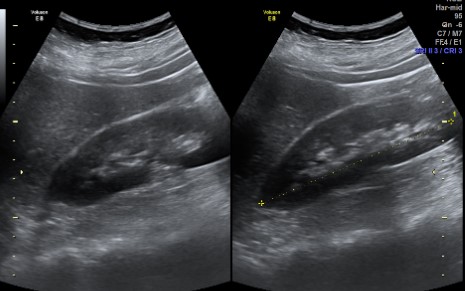
Reference Image
Frequently Asked Questions
1. What is a KUB ultrasound?
Ans. It Uses sound waves to look at your kidneys, ureters, and bladder, Helps detect stones, swelling, or blockages.
Q
2. Why is this test done?
Ans. Check pain in back, side, or lower abdomen,
Detect kidney stones or blockages.
Investigate urinary problems or blood in urine.
Q
3.Is it safe?
Ans . Yes completely safe & No radiation is used.
Q
4. Is any preparation needed?
Ans. Yes, full bladder is needed for better visualization of the urinary bladder and pelvic organs. You may be asked to drink water and avoid urination before the scan. You can eat normally.
Q
5. How long does the scan take?
Ans. It usually takes 15-20 minutes.
Q
6. Is appointment required ?
Ans. Appointment is preferbale else you will have to wait for your turn.
Q
7. Is an attendant required ?
Ans . Generally not required
Q
8. Is there any need to bring previous records ?
Ans. Yes , bring relevant old records .
TAT Policy
The Turnaround Time (TAT) depends on the following factors:
- Registration date and time
- Type of scan or test
- Scan time or sample collection time
In uncommon circumstances, TAT may be delayed due to test complexity or reasons beyond our control. You will be informed of the estimated TAT at the time of registration.